

Consultation with UK-Registered Podiatrist | Yau Ma Tei
Flat Foot & Orthotic Assessment
Beyond Arch Support: Direction for Every Step
Tired feet, arch aches, recurring heel pain, or inward-tilting shoes? At Flying Steps, we analyze your biomechanics, gait, and foot pressure to deliver custom orthotics, footwear guidance, and targeted rehabilitation.
Led by a UK-Registered Podiatrist | Over 1,000 Clinical Cases & Extensive Care Experience
Do I need insoles for flat feet?
Here are 4 key things to know first
No pain and normal mobility:
Having low arches doesn't automatically require treatment—it depends on your foot function, symptoms, and structural changes.
Pain or limited movement?
If you frequently experience tired feet, arch soreness, heel pain, or discomfort when moving your ankles and knees.
How Orthotic Insoles Can Help:
Orthotics provide support, rebalance pressure, and relieve pain. They do not permanently alter foot arches or bone structure.
Noticing foot shape changes?
Notice one-sided arch flattening, ankle swelling, or tiptoe difficulty? Seek an early assessment—even for mild pain.
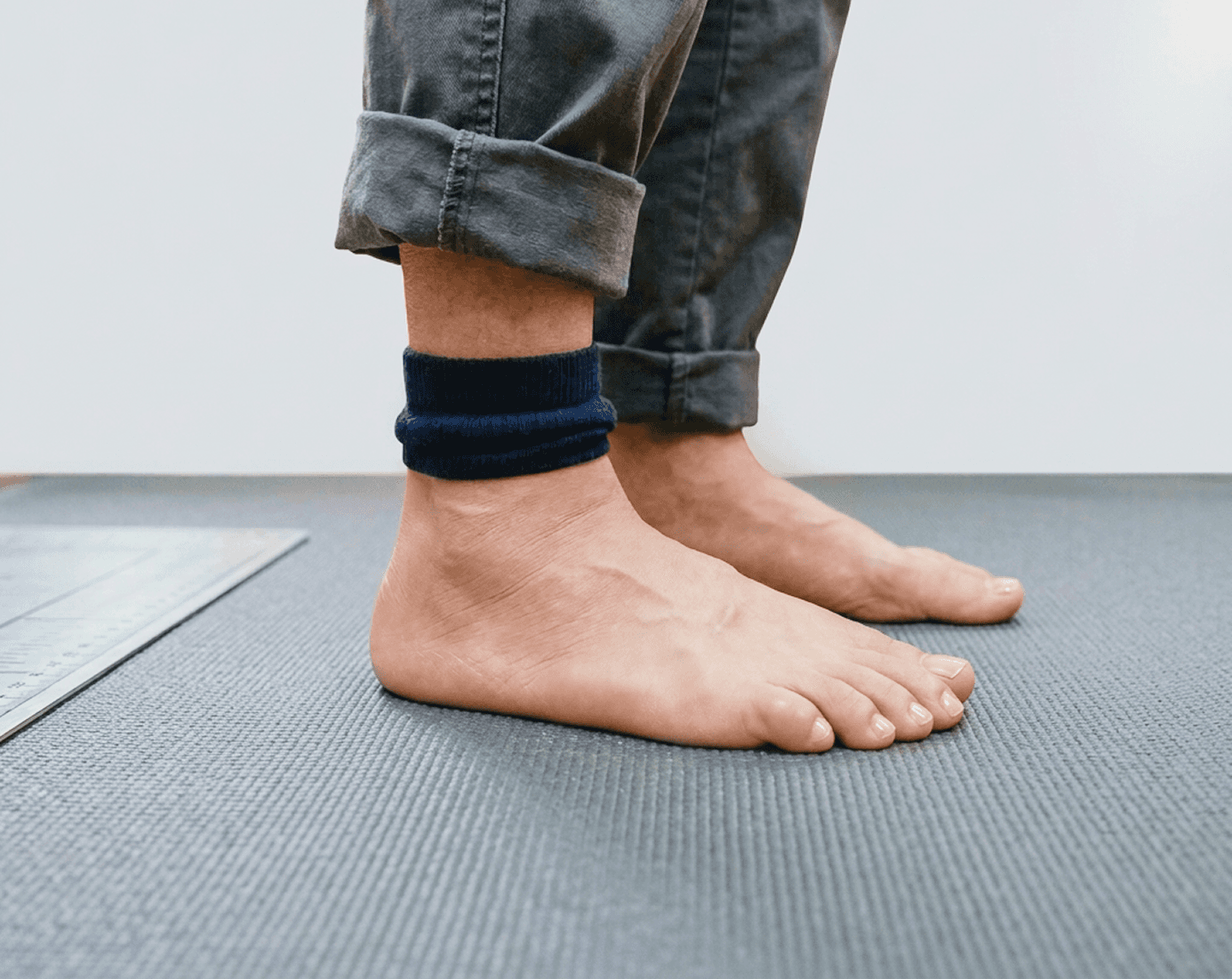
Flatfoot occurs when the inner arch flattens during weight-bearing, often accompanied by heel turning or forefoot alignment shifts. It can be congenital or develop over time.
Our Assessment Focus:
• Movement & Pressure: How force is distributed while standing or walking
• Mobility & Strength: Ankle range of motion and muscular control
• Functional Impact: Pain, fatigue, or limits on walking and activity

Comparing 3 Common Conditions
What are the types of flat feet, and how can you tell if you need to see a specialist?
Your arch flattens under weight, but reappears when sitting or standing on tiptoes.
This classification helps distinguish between typical flexible feet and structural or progressive issues that require further treatment.
When should you get flat feet assessed?
Flat feet don't always hurt, but here are a few warning signs you shouldn't ignore.

Easily tired feet and arch pain after walking for a while
Persistent fatigue in the soles of your feet or inner arches after long periods of standing, walking, or working could mean your daily activity levels are exceeding what your feet can comfortably handle.
Recurring heel pain
If you are also experiencing heel pain related to plantar fasciitis, we will assess your foot loading, ankle mobility, footwear, and activity levels—rather than basing your treatment solely on having flat feet.


Discomfort when moving your ankle or knee
Some individuals with flexible flat feet may experience ankle or knee pain. During an assessment, we look at your gait, muscle strength, footwear, and activity levels—rather than simply assuming your arch shape is the sole cause of your lower-limb discomfort.
If you experience any of the following symptoms, please schedule an appointment for a check-up as soon as possible.
Recent arch drop
• Noticeable arch drop in recent months
• Pain or swelling near the inner ankle
• Weak propulsion or difficulty rising on one heel
• Single-sided abnormality or noticeable foot stiffness
These symptoms aren't necessarily caused by flat feet. A clinical assessment helps identify the true root cause of your discomfort, pinpointing any biomechanical or functional factors that can be improved.

Advanced Diagnostic Technology
Sidas Foot Pressure Scanner Mat
Clinical Plantar Pressure Analysis: Understanding How Your Feet Bear Weight
The height of your arch affects far more than just the appearance of your feet. Through plantar pressure analysis, we can assess your contact area, pressure distribution, and any imbalances between your left and right sides while standing or walking. Combined with a comprehensive gait and functional assessment, this allows us to understand exactly how your feet bear weight.

Reveal invisible foot pressure:
By measuring your foot contact area and pressure distribution while standing and walking, we can assess exactly how your body weight is distributed across your feet. This provides valuable clinical insights that cannot be detected by visual observation or physical palpation alone.
Locating areas of high pressure:
Identifies high-pressure areas across the forefoot, heel, and arch to help pinpoint how uneven weight distribution may be causing foot pain, corns, or calluses.
By assessing your weight distribution and gait timing, we can identify any movement imbalances or compensatory habits you may have developed.
Combining pressure mapping data with clinical examinations and gait analysis helps us determine the right support zones, offloading features, and insole design for you. It also serves as a baseline to track and evaluate your progress over time.
Plantar pressure analysis should be interpreted alongside a clinical examination and cannot be used alone for diagnosis.
Assessment & Tailored Plan

Guiding every step with targeted support
How Custom Orthotics Help Manage Flat Feet
Custom orthotic insoles do more than just provide support—they actively redistribute pressure and realign forces across your feet. Tailored to your unique foot structure, gait, symptoms, and footwear, the right orthotics adjust contact points and arch support to optimise your foot posture, ease joint stress, and balance weight distribution when you move. The true value of an orthotic is not to force every foot into a rigid, one-size-fits-all position, but to give you the targeted support you need to move comfortably and naturally.
Supports joint alignment
Provides arch and rearfoot support while standing and walking, helping to align weight-bearing posture and guide joint movement.
Redistribute plantar pressure
Customised through tailored contouring, specialised materials, and targeted modifications to redistribute pressure and relieve stress on high-impact areas.
Move with greater comfort
For individuals experiencing symptoms from flexible flat feet, custom insoles are an effective non-surgical option to relieve pain and support mobility, especially when paired with targeted exercises.
How insoles affect foot alignment, pressure distribution, and pain relief varies depending on the design, your foot shape, and how your body responds. While clinical research supports orthotics as an effective treatment option, results can differ from person to person.
Tailored treatments for your specific needs
Designed with cushioning, contoured contact, and support to relieve pressure on painful areas
Assess how your foot mechanics relate to your symptoms before considering an insole trial, followed by an evaluation of how your feet respond during actual movement.

Comprehensive Podiatry Care
Registered podiatrists providing expert foot assessments, custom or prefabricated orthotics, tailored footwear advice, and targeted exercise plans with ongoing progress support.
Why Choose Us
Clinically Led. Hong Kong's Most Trusted Foot Care Service.
Flat Feet Insole Assessment: A Simple 4-Step Guide
Evaluated personally by UK-registered podiatrists. From consultation and gait analysis to plantar pressure mapping and prescriptions, every step is purposefully designed for your care.

Step 1
Foot Structure & Biomechanics
Please bring your everyday footwear (such as work or sports shoes) and any current insoles to your appointment. This allows us to assess your shoe fit and wear patterns.
Step 2
Gait and Functional Movement
We combine expert clinical assessment with diagnostic data, rather than relying solely on test results.

Step 3
Plantar Pressure Analysis
• Plantar Pressure Analysis: Evaluates pressure distribution, left-to-right imbalances, and focal loading during standing and walking.
We capture real-time foot pressure and gait analysis using advanced pressure mats, and combine these data with a clinical examination for a precise assessment.
Step 4
Prescription & Medication Review
Follow-up review recommended after 2–4 weeks of use

Footwear Advice and Recommendations
Foot & Lower Limb Exercises
Posture Correction Exercises
Plans tailored for work, daily life, and sports.

Transparent Costs. Zero Hard Sell.
Step 1: Initial Assessment
Consultation Fees
HK$ 300
Approx. 15 minutes per session
Assessed by a UK-Registered Podiatrist
Initial Detailed Consultation
Clinical Examination
Step 2: Choose your insoles
Semi-Custom & Medical-Grade Orthotic Insoles
From HK$600
Approx. 20–45 minutes per session
Start with the right support and size, then adjust as needed
Tailored to your foot shape, symptoms, footwear, and specific support or pressure-relief needs
Custom-Made Orthotic Insoles
From HK$2,000
Approx. 20–45 minutes per session
Custom-made to your foot measurements and clinical prescription
Specific requirements for foot shape, arch support, targeted pressure relief, or footwear fitting
*Enjoy a waived consultation fee with any custom insole purchase.
Supporting every step with insoles, building mobility through targeted training.
For symptomatic flexible flatfoot, both insoles and exercise can be part of management. The goal is to improve pain and functional performance, not simply to change the appearance of the arch.
If pain significantly limits your activities, please refer to our [Pain Management] page.

Flat Feet FAQs
What are the symptoms of flat feet?
Many people with flat feet experience no symptoms at all. When symptoms do occur, common complaints include tired feet after walking, arch ache, heel pain, or discomfort around the ankles and knees. However, these issues are not always caused by flat feet alone—a clinical assessment is essential to identify the underlying cause.
Do I really need insoles for flat feet?
Not necessarily. If your flat feet aren't causing pain or limiting your mobility, you generally don't need treatment purely for cosmetic reasons. However, if you often experience foot pain or fatigue after walking, or if you've noticed recent changes in your arches, it's worth getting them evaluated.
Can insoles fix flat feet?
Orthotic insoles are primarily designed to provide support, realign foot pressure, and relieve related symptoms while being worn. They are not intended to permanently change your bone structure.
Are your arches falling as an adult? Should you be concerned?
Yes, especially if you have pain or swelling around the inner ankle, a loss of push-off power, or difficulty standing on your tiptoes on one foot. These symptoms often point to progressive foot collapse or underlying tendon and ligament issues, which shouldn't simply be managed with over-the-counter insoles.
Off-the-shelf vs custom insoles: which is better?
There is no one-size-fits-all answer. The key is to assess your foot shape, symptoms, pressure relief needs, and shoe fit—rather than assuming 'custom-made' is always the best choice.
Are flat feet linked to heel pain and plantar fasciitis?
It can be a factor, but not all heel pain is caused by flat feet. We'll assess how weight is distributed across your feet, your ankle mobility, footwear, and daily activity levels to determine the most effective treatment plan for you.
© 2026 FlyingStep. All Rights Reserved.